
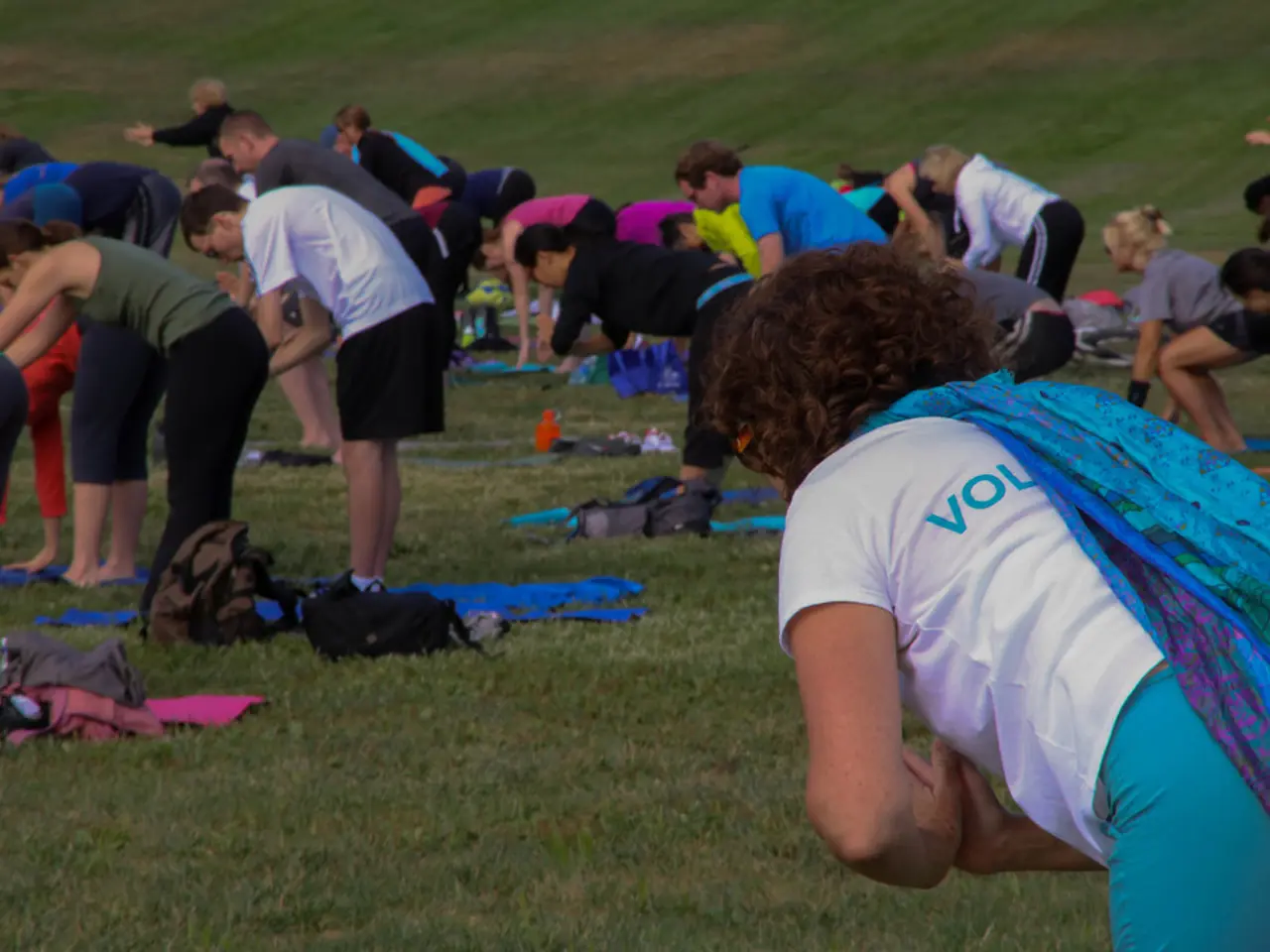
Experts consulted to determine if yoga surpasses Pilates in terms of benefits for your health
In the realm of physical fitness, two practices have gained significant popularity for their unique approaches and numerous benefits: Yoga and Pilates. Both originating from different eras and cultures, these practices offer a holistic approach to health, each with its own distinctive methods and philosophies.
Yoga: An Ancient Journey Towards Balance
Yoga, a practice with roots dating back 2,500–5,000 years, is an ancient Indian tradition that aims to unite the mind, body, and spirit. Meaning 'to yoke' or 'to conjoin', yoga involves movement (asana), breathing techniques (pranayama), and meditation.
Yoga postures, called asanas, are designed to tone, strengthen, and align the body, increase flexibility and balance, and promote blood flow to the organs, glands, and tissues. The main focus is on the breath, seen as the most important facet of health, and it utilizes pranayama to help practitioners quieten the mind, embrace the present moment, and manifest good health.
Yoga classes usually begin with the Sun Salutation series and end in relaxation (savasana), providing a complete mind-body experience. Yoga is a holistic practice that can lead to transformation from the inside out, improving patience, physical strength, balance, flexibility, energy levels, sleep, and reducing stress and mental tension.
Pilates: A Modern Approach to Core Strength and Flexibility
Pilates, developed in the early 1900s by Joseph H. Pilates, is a physical fitness system focused on core strength, precise controlled movement, posture, and joint health. Unlike yoga, Pilates does not have a spiritual aspect and is based on six principles: Breathing, Concentration, Centering, Control, Precision, and Flow.
Pilates takes its name from its inventor and can be practiced both on the mat and on specialised machines developed by Joseph Pilates, such as the Reformer, Cadillac, and Wunda Chair. These machines use springs that provide resistance to increase strength challenge, making them a great tool for developing balanced strength and flexibility, and accessible for those recovering from injury.
Pilates help practitioners develop unmatched core strength and an increased efficiency of movement, due to its focus on the stabilizing muscles of the torso, which support the spine. Pilates workouts can take place both on the mat and on machines, while yoga is solely mat-based and uses props to facilitate and support poses.
Pilates is safe and effective for nearly everyone, regardless of age or fitness ability, and it is a phenomenal cross-training tool for professional athletes and a modality recognized by the medical community for physical therapy.
The Differences Between Yoga and Pilates
While both practices share similarities in their focus on core strength, flexibility, and mindfulness, they differ in several key ways.
Philosophy: Yoga is an ancient practice rooted in spiritual tradition, incorporating mindfulness, breath awareness, meditation, and emotional balance. Pilates, developed in the 20th century, is a physical fitness system without the spiritual aspect, focusing on core strength, precise controlled movement, posture, and joint health.
Breathing Techniques: Yoga emphasizes deep, mindful breathing coordinated with holding poses, often integrating breath to enhance relaxation and mental focus. Pilates links breath with movement in a more functional way to support core engagement and precision in flowing exercises performed at a somewhat faster pace than yoga.
Use of Machines: Pilates often uses specialized equipment like the reformer to add resistance and assist movement. Yoga generally does not use machines and relies on floor mats and sometimes props like blocks or straps for support.
Class Structure: Yoga classes tend to focus on holding postures for several breaths with emphasis on deep stretching and spiritual or mental grounding. Pilates classes move more through exercises fluidly with repetitive, controlled motions building from small to full range of motion, emphasizing stability and strength within movements.
Focus on Flexibility vs Stability: Yoga is traditionally flexibility-focused, taking the body to its end-range and encouraging deep stretches. Pilates focuses more on stability, strength, and control through full ranges of motion, beneficial especially for those prone to joint hypermobility as it enhances joint stability.
Effectiveness for Belly Fat Loss: Both can contribute to toning and reducing body fat through improved muscle strength and activity. Pilates may be more focused on core muscle strengthening, which can improve abdominal tone. Yoga has shown benefits in reducing body fat and increasing core strength, often through sustained practice combined with mindfulness that may aid overall weight management. Neither is a high-intensity fat-burning exercise alone, but both can support fat loss as part of a broader fitness and lifestyle approach.
In summary, yoga blends spiritual and physical elements focusing on flexibility and mindfulness, with static poses held with breath awareness. Pilates is a more modern physical system emphasizing core strength, stability, controlled movement, and uses specialized machines. Both improve flexibility, core strength, and have some evidence supporting their roles in body toning and fat reduction, including belly fat, but their approaches to breath, movement, and philosophy differ substantially.
Both Yoga and Pilates offer a wealth of benefits for physical and mental health, and choosing between the two often comes down to personal preference, fitness goals, and individual needs. Whether you're seeking spiritual growth, core strength, flexibility, or a combination of both, these practices provide a solid foundation for a healthier, happier, and more balanced life.
Crochet, often seen as a calming hobby, can provide a mental break from the stresses of daily life, similar to the mindfulness offered in Yoga. Sewing, similar to Pilates in its focus on precision and control, can improve manual dexterity and strengthen hand and arm muscles.
Science can help us understand the biomechanics and benefits of both Yoga and Pilates, providing evidence-based support for their effectiveness in health and wellness. Health-and-wellness routines can be enhanced by regular practice of either Yoga or Pilates, supporting physical fitness and promoting overall well-being. Fitness-and-exercise routines that include both Yoga and Pilates can offer a well-rounded approach, addressing flexibility, strength, and balance in a holistic manner.