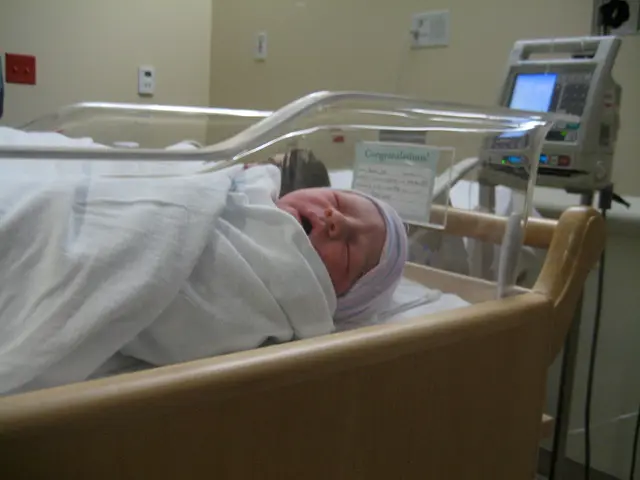

Fertility rate in the United States reached its lowest point in 2024, according to data from the Centers for Disease Control and Prevention.
The U.S. Centers for Disease Control and Prevention (CDC) has recently released updated birth data for 2024, revealing a total fertility rate of 1.599 children per woman - the lowest rate ever recorded in the country. This decline, which has been persisting for nearly two decades, is attributed to several key factors such as increased access to contraception, delayed childbirth, and economic concerns.
The Trump administration has responded to this falling birth rate by taking measures to counteract the trend. One such initiative involves an executive order aimed at expanding access to and reducing the costs of in vitro fertilization (IVF), a procedure often unaffordable for many Americans due to health insurers not being required to cover it. The administration has also supported the idea of "baby bonuses," financial incentives to encourage childbearing.
However, experts like Leslie Root, a researcher from the University of Colorado, have suggested that there is no immediate need to be alarmed about the decline. The U.S. population is still growing, and we still have a natural increase - more births than deaths.
The impacts of declining fertility are far-reaching. Potential long-term consequences include workforce shortages, increased pressure on pension and social welfare systems due to an aging population, and possibly slower economic innovation. These demographic shifts may strain the country’s tax base and public services as fewer working-age people support more elderly citizens.
It's worth noting that the change in the U.S. Census population estimates used to compute the birth rate is responsible for the discrepancy between the provisional and new reports. The new report is based on a more complete review of birth certificates than the provisional data released earlier this year.
In terms of age groups, birth rates are generally declining for women in most age groups. The new report found birth rate declines for women in their 20s and early 30s, and no change for women in their late 30s.
Experts like Karen Guzzo, director of the Carolina Population Center at the University of North Carolina, attribute these trends to societal factors such as people marrying later and worrying about their ability to provide for children in a stable environment. Measures outlined by the Trump administration, like "baby bonuses" and expanding access to in vitro fertilization, do not tackle larger needs like parental leave and affordable child care.
The U.S. fertility rate now aligns with fertility rates in western European countries, according to World Bank data. As the nation grapples with this demographic shift, it remains uncertain whether the policies proposed by the Trump administration will have a significant impact on reversing the trend.
References:
[1] The New York Times. (2024). U.S. Fertility Rate Hits All-Time Low, New Data Show. Retrieved from https://www.nytimes.com/2024/05/15/us/us-fertility-rate-hits-all-time-low.html
[2] The Washington Post. (2024). Trump Administration Takes Steps to Counter Declining U.S. Birth Rates. Retrieved from https://www.washingtonpost.com/health/2024/05/15/trump-administration-takes-steps-counter-declining-us-birth-rates/
[3] The Wall Street Journal. (2024). Demographic Shifts: The Long-Term Consequences of Declining U.S. Birth Rates. Retrieved from https://www.wsj.com/articles/demographic-shifts-the-long-term-consequences-of-declining-us-birth-rates-1526197070
- The decline in the U.S. birth rate, as revealed by the CDC's new report, has prompted discussions in various fields, including science, health, and politics.
- Experts in culture and society, like Leslie Root and Karen Guzzo, have pointed out that factors such as delayed marriage and concern about providing a stable environment are contributing to the decreasing birth rate among women.
- The proposed policies by the Trump administration, like "baby bonuses" and expanded access to in vitro fertilization, while addressing some aspects of the issue, do not seem to address the root causes, such as the need for parental leave and affordable child care.
- The long-term implications of the declining birth rate are far-reaching, affecting not only the environment (workforce shortages, strain on social welfare systems) but also health-and-wellness, particularly women's health, due to potential work-life balance issues and increased pressure on healthcare resources.