Gorilla social hierarchy is not dictated by muscle strength, contrary to common belief.
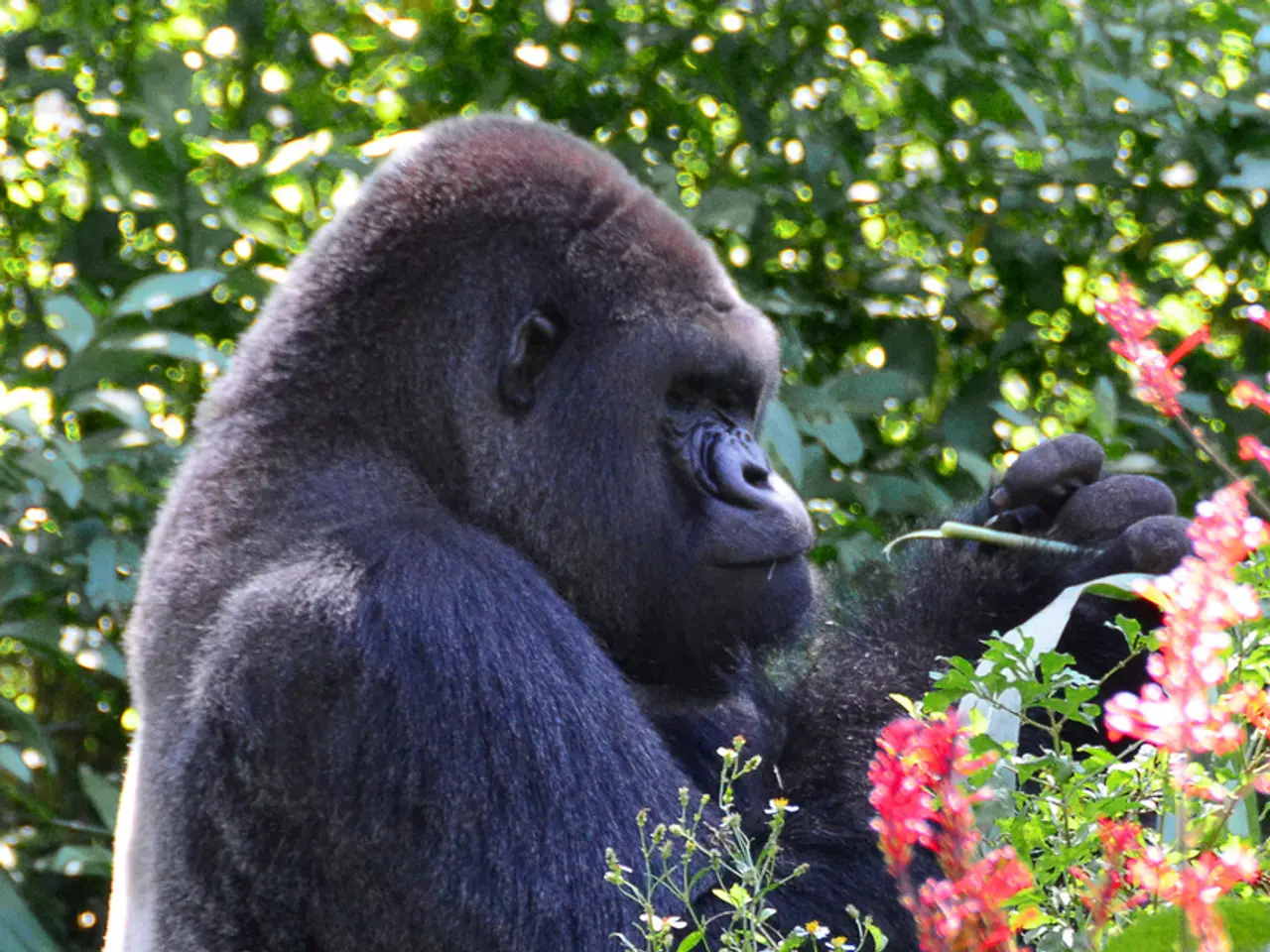
In a groundbreaking study published in "Current Biology," researchers Nikolaos Smit and Martha Robbins from the Max Planck Institute for Evolutionary Anthropology in Leipzig have uncovered a fascinating dynamic within mountain gorilla groups. Contrary to popular belief, female gorillas can and often do rank above male gorillas within their group hierarchy.
The social hierarchy in mountain gorilla groups is influenced by several factors, including individual needs, social context, male presence, and reproductive status. Female gorillas adjust their aggression based on personal circumstances such as pregnancy and lactation, as well as the group composition. For example, females show more aggression towards higher-ranking females when more males are present, likely because male protection creates a safer environment for riskier behavior. Conversely, females tend to target weaker, lower-ranking females when there are more females in the group.
Despite males often being larger and stronger, females can rank above some males due to the complex social dynamics and alliances rather than sheer size or strength. Female mountain gorillas form social ties with other females, which help them join new groups and gain social allies, thereby improving their rank or social position within the group. These social bonds and strategic aggression help females maintain and improve their positions in the hierarchy.
The alpha male's dominance in the group is undisputed, but relationships between females and other males are more complex than previously thought. Non-alpha male gorillas may submit to females to potentially negotiate a future connection or avoid expulsion from the group. This dynamic is not necessarily driven by force, but by social structures. In about a quarter of typical conflict situations observed, females managed to assert themselves against males who were sometimes twice their size.
Interestingly, prime-aged alpha male gorillas win almost all interactions with females. However, in the absence of prime-aged alpha males, either older than 30 or younger than 20, females usually win in competition. Prime-aged alpha male gorillas sire about 85% of the offspring in their groups. Yet, the study suggests that gender-specific power asymmetries in human societies may not be fully explained by physical differences between the sexes.
The study highlights the diversity in gender dynamics among different types of great apes. While prime-aged alpha male gorillas are invincible within their groups, female bonobos, not male common chimpanzees, hold the reins in their respective groups. This research implies that if such structures are not consistently found in our closest relatives, patriarchy may be culturally conditioned.
The research was based on data from over 25 years of research on four wild mountain gorilla groups in Uganda. The study challenges the traditional view of male dominance in mountain gorilla groups and offers a new perspective on the complex social dynamics within these fascinating creatures' societies.
- In the realm of social structures, the study implies that gender dynamics vary among great apes, such as mountain gorillas, where even in the presence of larger, stronger males, females can assert dominance due to complex social dynamics.
- Despite males being in a position of power in health-and-wellness related contexts like fitness and exercise, this study on mountain gorilla groups reveals that in the absence of prime-aged alpha males, females often win competitions, challenging the traditional views of male dominance.
- The diversity in gender dynamics observed among great apes, such as mountain gorillas and bonobos, suggests that human societies' gender-specific power asymmetries may not be solely attributed to physical differences between the sexes, but possibly influenced by cultural conditions.