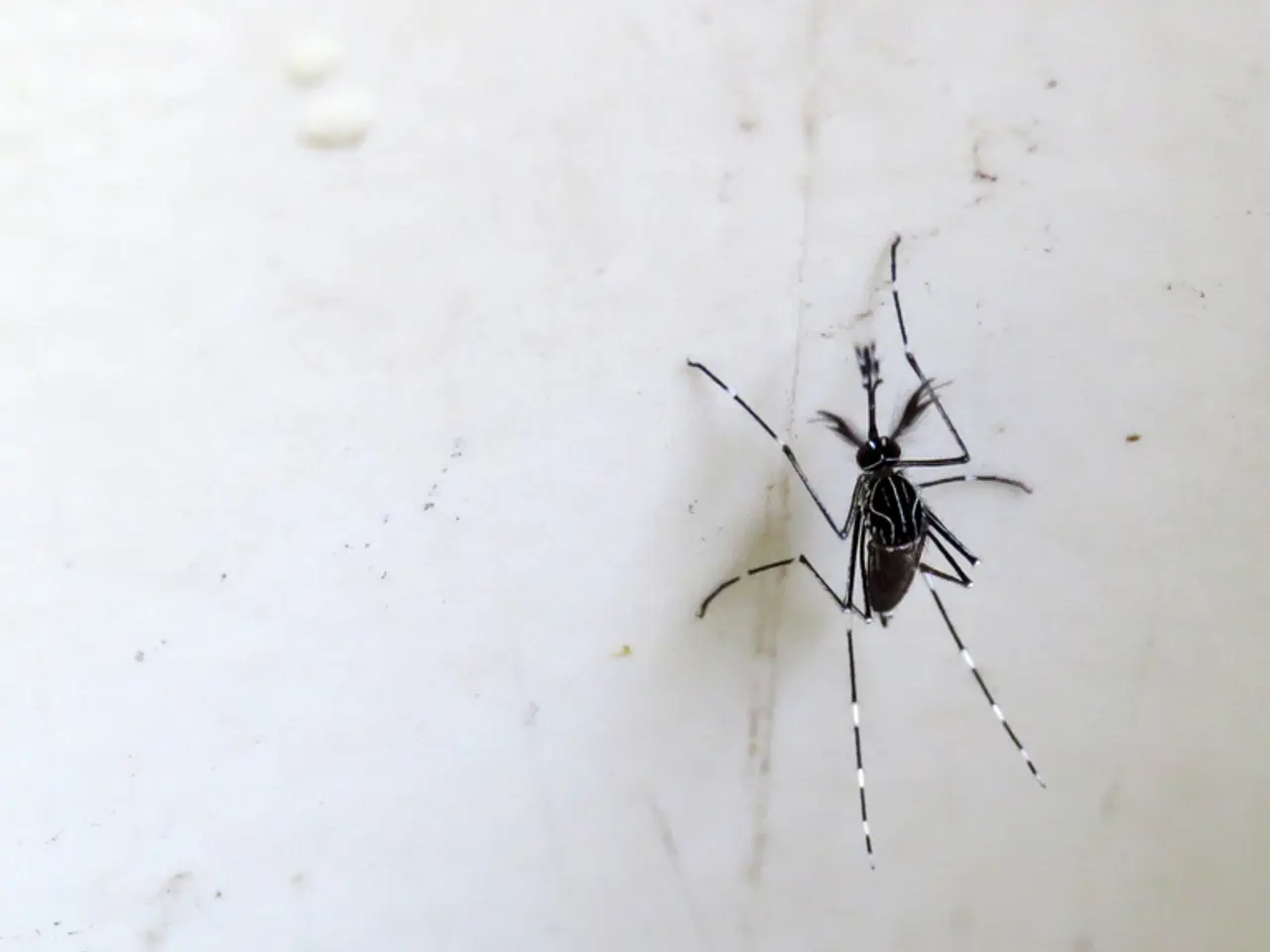
Mosquitoes carrying the Nile virus poses a health threat in Castilblanco de los Arroyos, sparking an alert
Andalusia Intensifies West Nile Virus Control Measures
In response to the increasing risk of West Nile Virus (WNV) in Andalusia, Spain, the local administration has been urged to intensify control and treatment measures during the high-risk period. The call comes after the confirmation of WNV circulation in Culex perexiguus mosquitoes, as reported by the Health Agent following a verification carried out in July.
The Junta de Andalucía has simplified the WNV risk levels into three categories – low, medium, and high – to facilitate understanding and prevention measures. As of now, a total of 41 municipalities in Seville, 16 in Cádiz, 11 in Córdoba, 4 in Granada, 15 in Huelva, 7 in Jaén, 9 in Málaga, and 2 municipalities in Almería are categorized as high-risk areas.
To combat the virus, the regional Ministry of Health has implemented more than 1,100 actions, including setting up mosquito traps and treating breeding areas with authorized, safe, and environmentally friendly insecticides. Municipalities are required to develop prevention plans at a cost of approximately 15,000 to 20,000 euros annually to minimize virus transmission.
Local authorities have also been advised to intensify pest and mosquito control efforts, particularly during the high-risk months. For instance, Torrox town hall has recently stepped up its efforts to reduce mosquito populations. In addition, integrated surveillance and vector control programs have been established in many municipalities.
Older adults and people with chronic diseases remain the highest risk group for severe WNV symptoms, which can include neurological involvement. Climate factors such as higher temperatures and spring rains contribute to mosquito proliferation and virus transmission.
The municipality of Castilblanco de los Arroyos, Seville, has been declared a high-risk area for WNV circulation. In 327 (78%) of medium and high-risk municipalities, a Municipal Vector Control Plan (MVCP) and/or some related action has been taken. Furthermore, 183 (50%) of municipalities with low-risk levels also implement appropriate surveillance and control measures.
The declaration is for a minimum period of four consecutive weeks or until no new cases are found and WNV circulation is not detected. The update of the Integrated Vector Surveillance and Control Program for West Nile Fever for the 2025 season includes all municipalities in Andalusia in some level of risk.
The 2011 Public Health Law assigns the evaluation, management, and communication of health risks to the Andalusian Government, while disinsectization treatments are the responsibility of the official services of the municipalities and provincial councils. Andalusia continues ongoing monitoring to adapt responses as needed to combat the spread of WNV during the summer mosquito season.
- People in high-risk areas, such as older adults and those with chronic diseases, should be vigilant about West Nile Virus symptoms, particularly neurological involvement, due to the heightened risk.
- In the fight against West Nile Virus, it's crucial for local authorities to intensify their efforts in controlling pests and mosquitoes, as well as implementing health-and-wellness programs focusing on science and medical-conditions, especially during the high-risk months.