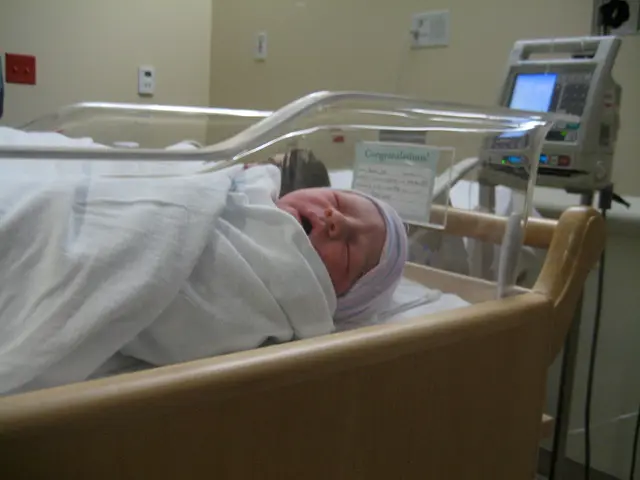

Pregnancy and Rheumatoid Arthritis: Guidance, Impact, and Preparation Strategies
Rheumatoid arthritis (RA), a long-term condition primarily affecting joints, can pose unique challenges during pregnancy. However, with careful planning, appropriate medication adjustments, and close monitoring, women with RA can have a successful and healthy pregnancy and delivery.
**Improvement and Flares during Pregnancy**
Approximately 60% of women with RA experience an improvement in symptoms during pregnancy, with some even entering remission without the need for disease-modifying antirheumatic drugs (DMARDs). This improvement is thought to be due to immunological changes in pregnancy[1][4]. However, flares of RA symptoms frequently occur in the postpartum period, requiring careful management.
**Potential Risks**
Women with active RA during conception are advised to achieve remission or low disease activity before pregnancy to minimise risks. RA and certain medications can complicate fertility and pregnancy outcomes. RA itself, as well as some drugs used to treat it, may reduce conception likelihood or lead to pregnancy complications such as preeclampsia and premature birth[3]. Untreated or poorly controlled RA can increase risks of poor pregnancy outcomes, stressing the importance of multidisciplinary prenatal care including rheumatologists and obstetricians specialising in high-risk pregnancies[1][3].
**Medication and Treatment Management**
Pharmacological treatment must be carefully adjusted to avoid teratogenicity (harm to the fetus). For example, methotrexate and leflunomide are contraindicated and must be discontinued at least 3 months before conception[1]. Preferred medications during pregnancy include acetaminophen, NSAIDs (with caution), glucocorticoids, sulfasalazine, and sometimes TNF-α inhibitors and azathioprine, depending on disease activity and safety profiles[1]. Lifestyle modifications, regular exercise, stress management, and close monitoring help reduce flare-up risks and manage symptoms effectively during pregnancy[2].
**Postpartum Considerations**
RA symptoms may worsen postpartum, so close follow-up care and timely management are essential. Pharmacologic treatment may be resumed or adjusted postpartum considering breastfeeding safety (consulting resources like LactMed) and disease control needs[1].
In conclusion, RA often improves during pregnancy but requires careful planning, medication adjustment to avoid fetal harm, and close multidisciplinary monitoring to minimise risks. Postpartum flares are common, so ongoing management after delivery is critical to maintain maternal health and function[1][2][3][4]. It is important for women with RA who wish to conceive to consult a doctor to discuss their medications and the best time to try to get pregnant. With the right support and care, women with RA can have a fulfilling and healthy pregnancy and parenthood.
[1] American College of Rheumatology (ACR). (2015). Rheumatoid Arthritis and Pregnancy: 2015 ACR/ARHP Guideline for the Care of Women with Rheumatoid Arthritis Before, During, and After Pregnancy. Arthritis Care & Research, 67(11), 1684–1703. [2] National Health Service (NHS). (2018). Rheumatoid arthritis and pregnancy. Retrieved from https://www.nhs.uk/conditions/rheumatoid-arthritis/pregnancy/ [3] American College of Obstetricians and Gynecologists (ACOG). (2018). Committee Opinion No. 736: Rheumatoid Arthritis and Pregnancy. Obstetrics & Gynecology, 132(3), e109–e116. [4] Van den Berg-Vos, R., van der Heijde, D., Smits, M., van der Heijde, D., van der Graaf, Y., van der Woude, C., ... & van den Bosch, F. (2011). Rheumatoid arthritis during pregnancy: a systematic review. Annals of the Rheumatic Diseases, 70(1), 56–62.
- Treaters specializing in rheumatology and high-risk pregnancies play a crucial role in the management of pregnant women with rheumatoid arthritis (RA).
- The improvement in RA symptoms during pregnancy, experienced by around 60% of women, is believed to be due to immunological changes in pregnancy.
- Pregnant women with RA must carefully plan their medication adjustments to avoid teratogenicity and ensure the safety of the fetus.
- Certain medications, such as methotrexate and leflunomide, are contraindicated and must be discontinued at least three months before conception.
- Preferred medications during pregnancy include acetaminophen, NSAIDs (with caution), glucocorticoids, sulfasalazine, and sometimes TNF-α inhibitors and azathioprine.
- Risks of poor pregnancy outcomes increase with untreated or poorly controlled RA, emphasizing the importance of close multidisciplinary prenatal care.
- Women who wish to conceive while on RA medications should consult their doctors to discuss the best times for trying to get pregnant.
- Postpartum flares of RA are common, so close follow-up care and timely management are vital to maintain maternal health and function.
- Pregnancy complications, such as preeclampsia and premature birth, may be linked to RA and certain medications used to treat it.