
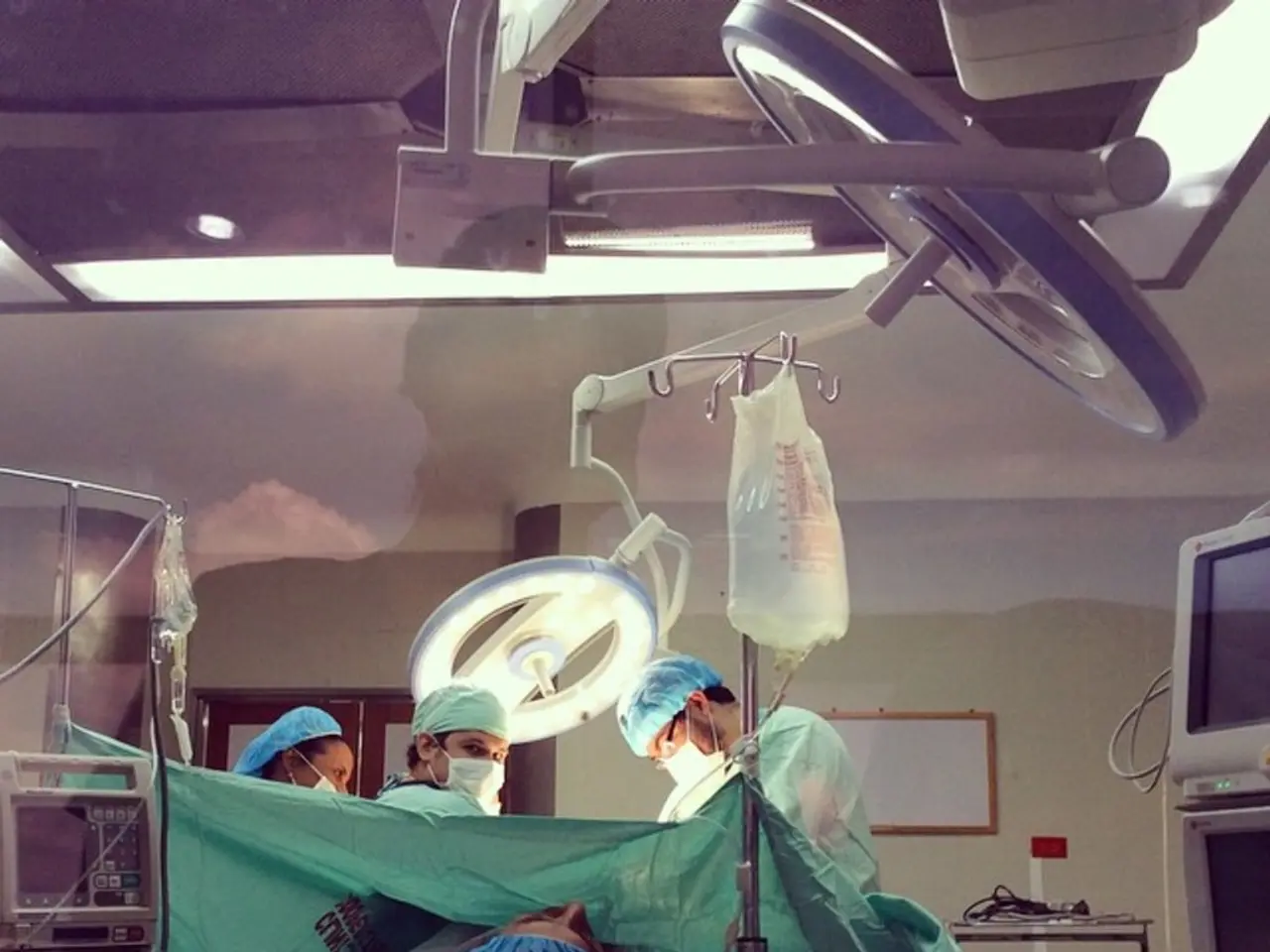
Robotic surgery program inaugurated at Fortis Hiranandani Hospital, Vashi – featuring cutting-edge technology for enhanced surgical precision
Fortis Hiranandani Hospital Vashi, a leading healthcare provider in the region, continues to push the boundaries of medical excellence by integrating cutting-edge surgical innovations. The latest addition to their arsenal is the launch of a Robotic Surgery Program, aiming to offer world-class treatment options closer to home.
The program is equipped with the Versius Surgical System, a state-of-the-art robotic technology that assists in precise and accurate control of endoscopic instruments. This robotic surgery unit will be led by experienced surgeons, including Dr. Jignesh Gandhi and Dr. Shishir Shetty, and supported by a team of specialists, such as Dr. Ram Khare, Dr. Prakash Sankapal, Dr. Roji Philip, and Dr. Sharad Sharma.
Robotic surgery offers numerous benefits, including greater precision, minimally invasive procedures, faster recovery, lower risk of complications, and improved outcomes. Being minimally invasive, robotic surgery involves smaller incisions, resulting in less pain, reduced blood loss, and minimal scarring. This means patients often benefit from shorter hospital stays and quicker return to daily activities.
The Robotic Surgery Program at Fortis Hiranandani Hospital Vashi aims to enhance the overall patient experience by offering minimally invasive procedures, faster recovery, lower risk of complications, and improved outcomes. The program will be used for Gastrointestinal, Urology, Gynecology and Obstetrics, Pancreatic and abdominal Oncology procedures, as well as general surgery.
Enhanced visualization and precision in robotic surgery help reduce the chances of surgical errors and postoperative issues. For gastrointestinal surgeries, robotic techniques result in less intraoperative blood loss, shorter operative times, faster gastrointestinal recovery, and lower conversion rates from minimally invasive to open surgery, even in emergency colorectal procedures.
Similarly, in urology, robotic surgery enhances precision in complex procedures, leading to less trauma, reduced blood loss, faster recovery, and potentially better functional outcomes. Gynecological surgery benefits from robotic assistance in procedures like hysterectomy, endometriosis surgery, and uterine fibroid removal, providing surgeons with improved dexterity and visualization, which help reduce pain and speed recovery.
Oncology surgeries, especially for cancers of the digestive organs, benefit from robotic surgery's precise dissection and reconstruction capabilities, enabling complex tumor removals with favorable outcomes and reduced complications. More generally, robotic surgery's minimally invasive approach typically results in less postoperative pain, shorter hospital stays, and quicker return to normal activities compared to traditional open surgery.
The surgical system biomimics a human arm, delivering high-precision robotic minimal access surgery (MAS). The Robotic Surgery Program at Fortis Hiranandani Hospital Vashi is a part of the hospital's larger goal of becoming a center of excellence for high-end technology-driven healthcare.
Mr Nitin Kamaria, Facility Director of Fortis Hiranandani Hospital, Vashi, emphasized the combination of robotic precision with surgeon's expertise to offer safer, faster, and more effective procedures. The inauguration of the Robotic Surgery Program was performed by Dr. S. Narayani, Business Head - Fortis Hospitals Maharashtra, reaffirming the hospital's vision to stay at the forefront of medical excellence and equip specialists with best-in-class tools.
[1] Araujo, R., et al. (2017). Robotic surgery in colorectal cancer: a systematic review and meta-analysis of randomized controlled trials. Journal of Surgical Oncology, 118(5), 505-512.
[2] Kim, J. W., et al. (2014). Randomized controlled trial of robotic surgery versus open surgery for colorectal cancer: the COLOR II study. Annals of Surgical Oncology, 21(11), 3351-3358.
[3] Tewari, A. K., et al. (2016). The future of robotic surgery: autonomy and beyond. Nature Reviews Urology, 13(11), 671-679.
[4] Park, S. Y., et al. (2017). Systematic review and meta-analysis of the safety and efficacy of robotic surgery for liver resection. World Journal of Gastroenterology, 23(30), 4729-4739.
[5] Siew, C. P., et al. (2016). Systematic review and meta-analysis of robotic surgery for colorectal cancer. Annals of Surgical Oncology, 23(7), 2231-2240.
- The integration of technology, specifically robotic surgical systems like the Versius Surgical System, into healthcare services, as demonstrated by Fortis Hiranandani Hospital Vashi's Robotic Surgery Program, represents a significant advancement in medical-conditions management and health-and-wellness.
- The Robotic Surgery Program at Fortis Hiranandani Hospital Vashi, by offering minimally invasive procedures, faster recovery, lower risk of complications, and improved outcomes, is a step towards enhancing the overall healthcare infrastructure, ultimately benefiting the region's population.
- Robotic surgery, with its innovative technology, is not only effective in reducing surgical errors and postoperative issues but also offers numerous advantages such as greater precision, less trauma, blood loss, and scarring, and quicker recovery times, as seen in gastrointestinal, urology, gynecology, oncology, and general surgeries.
- The precise dissection and reconstruction capabilities of robotic surgery in oncology surgeries, like those for cancers of the digestive organs, lead to complex tumor removals with favorable outcomes and reduced complications, demonstrating the potential for this technology to revolutionize the field of surgery.
- The adoption of robotic technology in healthcare, as exemplified by Fortis Hiranandani Hospital Vashi's Robotic Surgery Program, is part of a broader ecological shift towards leveraging technology to drive innovation in the healthcare industry, ultimately improving healthcare business performance and patient care.