
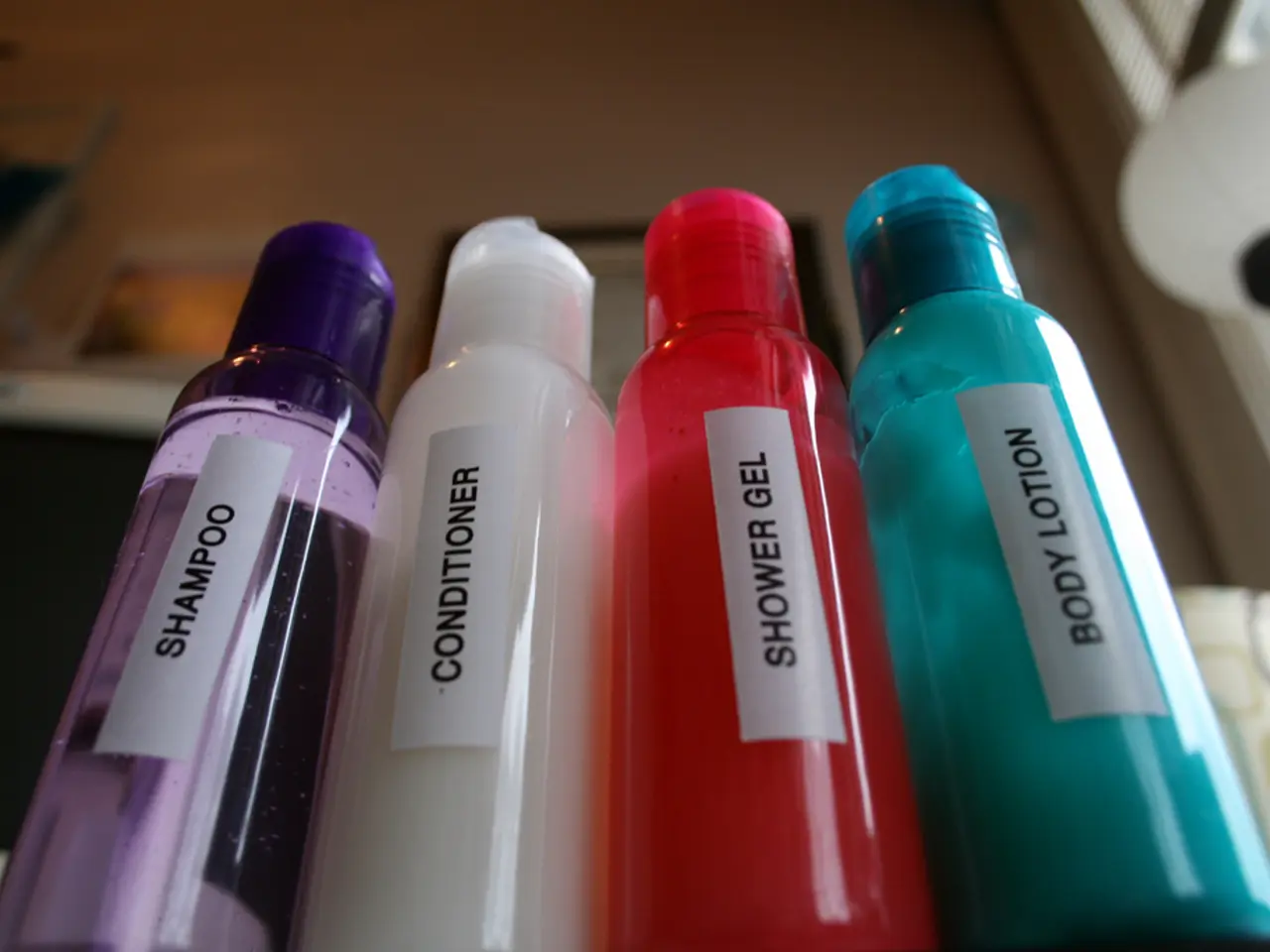
Skin Care Regimen and Products for Eczema: Key Features to Consider
For those suffering from eczema, maintaining a consistent skin care routine can significantly reduce flare-ups and support long-term skin resilience. The National Eczema Association (NEA) and the American Academy of Dermatology (AAD) recommend a gentle, hydrating approach that prioritises barrier repair.
Gentle Cleansing
The first step in an effective eczema skin care routine is gentle cleansing. Use a mild, non-soap cleanser to clean the skin without stripping natural oils. Cleanse with lukewarm or cool water, never hot, and avoid vigorous scrubbing or rubbing. Gently pat skin dry with a soft towel rather than rubbing.
Moisturize Frequently
Moisturizing the skin after washing, bathing, or showering is crucial for trapping moisture and protecting the skin's outer layer. Apply a rich moisturizer immediately within 3 minutes of bathing to lock in moisture and hydrate the skin. Prefer oil-based creams or ointments for better skin barrier repair. Reapply moisturizer whenever skin feels dry.
Use Targeted Treatments
Apply soothing serums or creams containing calming botanicals like chamomile or prickly pear to reduce inflammation and strengthen the skin barrier. Use any prescribed topical treatments gently with a light touch.
Protect the Skin Barrier
During the day, use a day cream or moisturizer that includes broad-spectrum SPF 30 or higher to shield from UV damage and environmental pollutants. For eczema on hands or in wet work environments, wear protective gloves with cotton liners.
Avoid Triggers and Irritants
Avoid harsh soaps, fragranced products, parabens, preservatives, and known allergens. Select fragrance-free, hypoallergenic products designed for sensitive skin. Avoid rapid temperature changes, sweating, and scratchy fabrics.
Additional Care Tips
- Keep showers short (under 10 minutes) and lukewarm.
- Consider using a humidifier in dry conditions.
- Manage stress and get sufficient sleep as these affect flares.
- Keep fingernails short to prevent skin damage from scratching.
When buying a sunscreen, check the label for any known allergens or irritants, choose a mineral-based sunscreen with titanium dioxide or zinc oxide as the active ingredient, and look for a product with SPF 30 or higher that offers broad-spectrum protection from both UVA and UVB light.
In atopic eczema, the skin barrier does not function as it should. A suitable eczema skin care routine may reduce a person's symptoms, increase skin moisture levels, and help prevent future flare-ups. Skin care is an important part of eczema treatment.
For infants, it can be helpful to identify and avoid eczema triggers, which may include sweat, saliva, dry air, topical products, laundry detergents or fabric softeners, allergens, and tobacco smoke. Parents and caregivers can follow these tips to manage eczema symptoms and reduce flare-ups: bathe the infant in lukewarm water, limit bath time to 5-10 minutes, apply a fragrance-free moisturizing cream or ointment at least twice a day, dress the child in soft, non-scratchy clothes, and keep their nails trimmed short.
Maintaining the skin's pH level and using occlusive products, such as petroleum jelly, can also help with eczema. If the infant's eczema is difficult to manage, speak with a dermatologist.
In conclusion, a good skin care routine for eczema involves gently cleansing, treating, moisturizing, and protecting the skin. Increasing moisture levels and avoiding triggers can significantly improve the management of eczema symptoms and support long-term skin health.
- Gently cleanse the eczema-prone skin using a mild, non-soap cleanser to maintain the skin's natural oils, and avoid harsh soaps and fragranced products.
- Moisturize frequently, applying a rich moisturizer immediately after bathing to lock in moisture, and reapply whenever the skin feels dry. Prefer oil-based creams or ointments.
- Use targeted treatments containing calming botanicals to reduce inflammation and strengthen the skin barrier, in addition to any prescribed topical treatments.
- Protect the skin with a day cream or moisturizer that includes broad-spectrum SPF 30 or higher to shield from UV damage and environmental pollutants, and wear protective gloves for wet work environments.
- Seekers of eczema skin care solutions should avoid known allergens, triggers like rapid temperature changes, sweating, and scratchy fabrics, and choose fragrance-free, hypoallergenic health-and-wellness products designed for sensitive skin.
- Reputable health-and-wellness entities like the National Eczema Association (NEA) and the American Academy of Dermatology (AAD) recommend a gentle, hydrating skin-care approach for eczema treatment, prioritizing barrier repair, and cite science as the foundation for their recommendations.